
Table of Contents
- Why This Actually Matters for Small Creators, Not Just Big Tech
- The EU AI Act: The Rule Setting the Global Standard
- Rule 1: AI-Generated Content Must Be Labeled
- Rule 2: Copyright Opt-Outs Are Now Enforceable
- Rule 3: High-Risk AI Systems Face Strict Documentation
- Rule 4: The US Is Moving Toward Federal Consolidation
- Rule 5: US States Are Filling the Gap With Their Own Laws
- Rule 6: Deadlines Are Shifting, Plan for the Strictest Version
- Rule 7: Penalties Are Real and Getting Enforced
- What This Actually Means for Your AI Animation or Content Business
- Frequently Asked Questions
- Final Thoughts
Why This Actually Matters for Small Creators, Not Just Big Tech
It’s easy to assume AI regulation is a problem for OpenAI, Google, and giant enterprises, not for someone running a StickBuzz-style animation channel or a small AI-assisted content business. That assumption is increasingly wrong. Several of the new rules taking effect in 2026 apply directly to anyone deploying AI systems, including individual creators and solopreneurs, not just the companies building the underlying models.
This matters especially for our own audience here at NeuronHubs. If you’re publishing AI-generated video, using AI to write content at scale, or running any kind of automated decision-making in a small business, some version of these rules likely already applies to you or will soon. This guide breaks down what’s actually changing in plain language, without pretending to be legal advice, so you know what to watch for and when to bring in an actual professional.
The EU AI Act: The Rule Setting the Global Standard
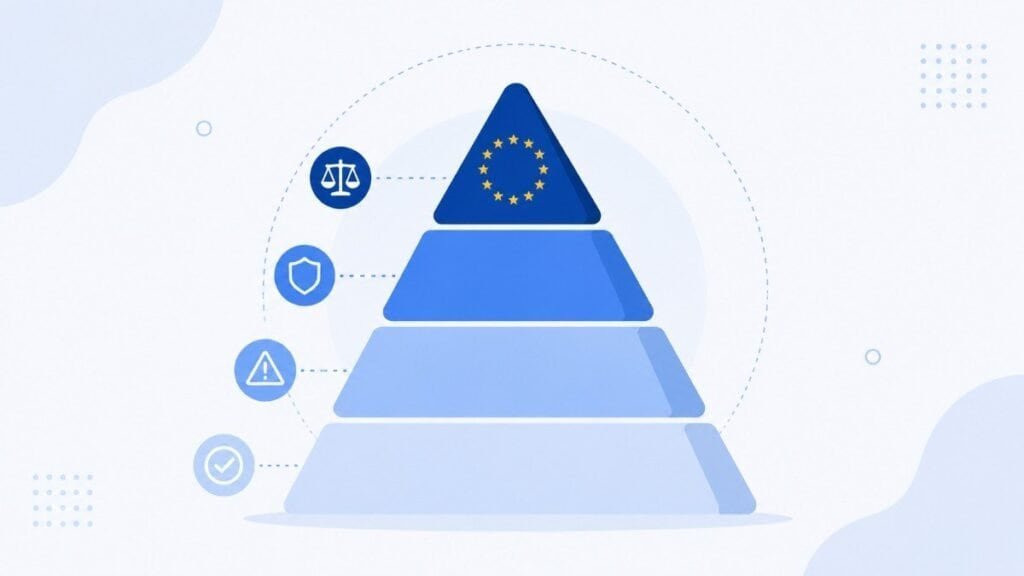
The EU AI Act is the world’s first comprehensive AI law, and even though it’s a European regulation, it’s increasingly treated as the global baseline the same way GDPR became the default privacy standard companies everywhere ended up following. It uses a risk-based framework, meaning obligations scale up based on how risky a given AI use case is considered, from minimal-risk applications with almost no requirements up to prohibited practices banned outright.
Most of the Act’s remaining provisions were originally set to take full effect on August 2, 2026, though a “Digital Omnibus” agreement reached in mid-2026 pushed several high-risk system deadlines further out, into 2027 in some cases. That delay is a useful reminder for the rest of this list: these dates keep moving, so treat every deadline mentioned here as the current best estimate, not a fixed date carved in stone.
Rule 1: AI-Generated Content Must Be Labeled

This is the rule most directly relevant to anyone running an AI animation channel. Under the EU AI Act, platforms and services publishing AI-generated text, audio, images, or video are required to clearly mark that content as artificially generated. The stated goal is reducing confusion between human-made and synthetic content, and cutting down on deepfake-driven misinformation.
For a StickBuzz-style creator, this doesn’t mean your content becomes illegal or unpublishable, but it does mean transparency is shifting from optional best practice to a legal requirement in at least one major jurisdiction, with other regions likely to follow a similar pattern over time. If your audience includes any EU viewers, or if the platform you publish on operates globally, it’s worth getting ahead of this now rather than reacting once enforcement actually starts affecting creators directly.
Rule 2: Copyright Opt-Outs Are Now Enforceable
Alongside the EU AI Act, the EU Copyright Directive now gives creators the ability to formally reserve their work and prevent it from being used to train AI models. Starting in 2026, AI developers are required to check whether a data source carries this kind of copyright reservation, and to exclude or properly license that content before using it in training.
This cuts both ways for creators. If you publish original scripts, character designs, or written content, you may now have a real, enforceable mechanism to keep that work out of AI training data if you choose to. On the other side, if your own workflow depends on AI tools trained on scraped web content, it’s worth knowing that the data supply chain behind those tools is under new legal pressure, which could eventually affect model behavior, availability, or pricing as this shakes out.
Rule 3: High-Risk AI Systems Face Strict Documentation
The EU AI Act reserves its strictest requirements for what it classifies as “high-risk” AI systems, generally meaning AI used in consequential decisions like hiring, lending, healthcare, education access, or law enforcement. These systems face conformity assessments, detailed technical documentation, and ongoing monitoring obligations.
Most content creators and animation channels fall well outside this high-risk category, but it’s worth knowing if your business is expanding into anything adjacent, using AI to screen job applicants for a growing team, for example, or using AI-driven decision tools in a client-facing service. The moment AI starts making or meaningfully influencing decisions that affect someone’s access to opportunity, the regulatory bar jumps considerably.
Rule 4: The US Is Moving Toward Federal Consolidation
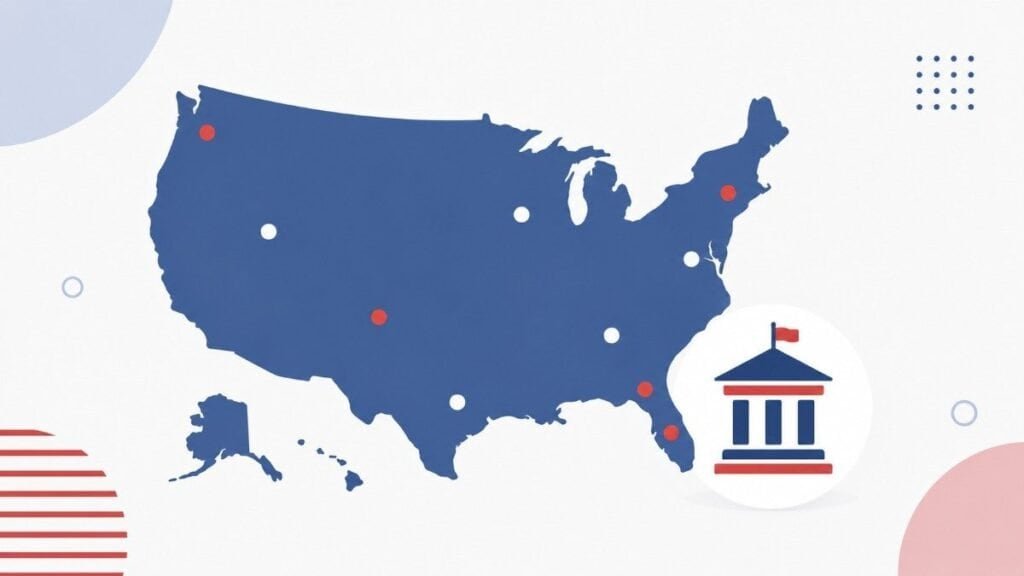
In December 2025, the US signed an Executive Order aimed at establishing a more unified national policy framework for AI, signaling an intent to consolidate what has so far been a patchwork of state-level rules and agency guidance into something more centralized. As of 2026, there still isn’t a single comprehensive federal AI law comparable to the EU AI Act, enforcement in the US remains largely sector-by-sector and agency-driven rather than one unified statute.
For US-based creators and small businesses, this means federal requirements remain less immediately pressing than EU rules, but the direction of travel is clearly toward more structure, not less. Watching how this Executive Order gets implemented over the rest of 2026 is worth doing if a meaningful share of your income comes from AI-assisted content or automation.
Rule 5: US States Are Filling the Gap With Their Own Laws
In the absence of a single federal law, individual states have moved ahead with their own comprehensive AI governance rules. Colorado and California in particular have finalized broader AI governance statutes imposing risk management, documentation, and oversight obligations on certain high-impact AI systems, with enforcement beginning in late 2025 and continuing through 2026.
If you operate primarily online with a national or global audience, it can be genuinely unclear which state’s rules technically apply to you. The practical approach most compliance-focused businesses take, plan to the strictest applicable standard first, then relax where a lighter rule clearly applies, is worth adopting even at small business scale rather than trying to track every individual state’s specific requirements.
Rule 6: Deadlines Are Shifting, Plan for the Strictest Version
If there’s one consistent pattern across all of this in 2026, it’s that deadlines keep moving. The EU AI Act’s high-risk system deadline has already shifted once via the Digital Omnibus agreement, and further negotiation throughout the year is likely to adjust timelines again before everything is finalized.
The practical lesson here isn’t to ignore the rules because dates keep changing, it’s the opposite. Treat the most recently announced strictest version of any applicable deadline as your working assumption, and build in buffer time for compliance work rather than waiting for a final, permanently fixed date that may not arrive as cleanly as expected.
Rule 7: Penalties Are Real and Getting Enforced
It’s tempting to treat all of this as background noise that only matters for major tech companies, but the EU AI Act’s penalty structure is genuinely severe, the most serious violations, particularly around prohibited practices, can reach fines in the tens of millions of euros or a meaningful percentage of global annual revenue, with lower caps applying to less severe breaches. As of August 2026, the European Commission has formally begun enforcing the Act’s rules and new transparency requirements.
For a small creator or solopreneur, the realistic exposure here is low compared to a major AI lab, but “low” isn’t “zero,” particularly around the content labeling and copyright provisions that apply more broadly than the high-risk system rules. Understanding which specific rules could plausibly apply to your actual business, rather than assuming none of it matters at your scale, is worth the hour it takes to read through this guide and a genuine legal consultation if you’re unsure.
What This Actually Means for Your AI Animation or Content Business
Stepping back from the legal detail, here’s the practical takeaway for a NeuronHubs-style creator running an AI animation channel or content business in 2026. Start labeling AI-generated content clearly where your platform or audience requires it, even ahead of strict enforcement, since building the habit now costs little and protects you as rules tighten. Keep basic records of which AI tools you use and roughly how, not because you’re currently required to, but because “high-risk” classifications and enforcement scope have both been expanding, and having a simple paper trail costs nothing today and could matter later.
If you’re scaling into anything touching hiring, lending, or other consequential decisions, even informally, that’s the point to actually consult a professional rather than relying on a blog post. And generally, keep an eye on this space the same way you’d track platform algorithm changes, since a rule shift in the EU or a new US state law can realistically affect how you’re required to operate within a single publishing quarter.
Frequently Asked Questions
Does AI regulation actually apply to small creators, or just big companies? Increasingly, yes, at least in part. Content labeling requirements under the EU AI Act apply broadly to anyone publishing AI-generated content, not just large AI developers, though the strictest documentation and audit requirements are reserved for high-risk system providers.
Do I need to label my AI-generated videos as AI-made? Under the EU AI Act, platforms and services publishing AI-generated audio, video, images, or text are required to clearly mark that content as artificially generated. If any meaningful share of your audience is in the EU, or your platform operates under EU rules, it’s worth building this labeling habit now rather than waiting for enforcement to catch up to smaller creators.
What’s the difference between the EU AI Act and US AI regulation? The EU AI Act is a single, comprehensive, binding law with a risk-based framework and significant penalties. The US, as of 2026, relies more on a combination of executive orders, agency-level enforcement, and individual state laws (like Colorado’s and California’s), rather than one unified federal statute.
Can I still train or use AI tools trained on copyrighted content? This is shifting. Under the EU Copyright Directive, creators can now formally reserve their work from AI training, and AI developers are required to check for and respect those reservations starting in 2026. This affects the data supply chain behind AI tools more than it directly restricts end users, but it’s worth watching as it may affect tool availability or licensing terms over time.
How often do these rules change, and how do I keep up? Quite often in 2026 specifically, several deadlines have already shifted once through EU negotiations, and further changes are expected before the year is out. Treat this guide as a snapshot rather than a permanent reference, and check back periodically or follow a legal or industry newsletter focused on AI policy if this genuinely affects your business.
Final Thoughts
AI regulation in 2026 for creators and small businesses is no longer a distant, theoretical concern, it’s an active, moving target with real deadlines, real penalties, and real relevance even at a small, one-person channel scale. The EU AI Act sets the global tone, content labeling and copyright opt-out rules are the two most likely to touch AI animation and content creators directly, and the US is still catching up through a mix of executive action and state-level laws. AI vs Human Jobs: What Will Survive in 2026
None of this means panicking or overhauling your workflow overnight. It means building a few good habits now, labeling AI content where required, keeping light documentation of your tool use, and staying reasonably current on this fast-moving space, so that when enforcement does catch up to smaller creators, you’re already ahead of it rather than scrambling to catch up.