
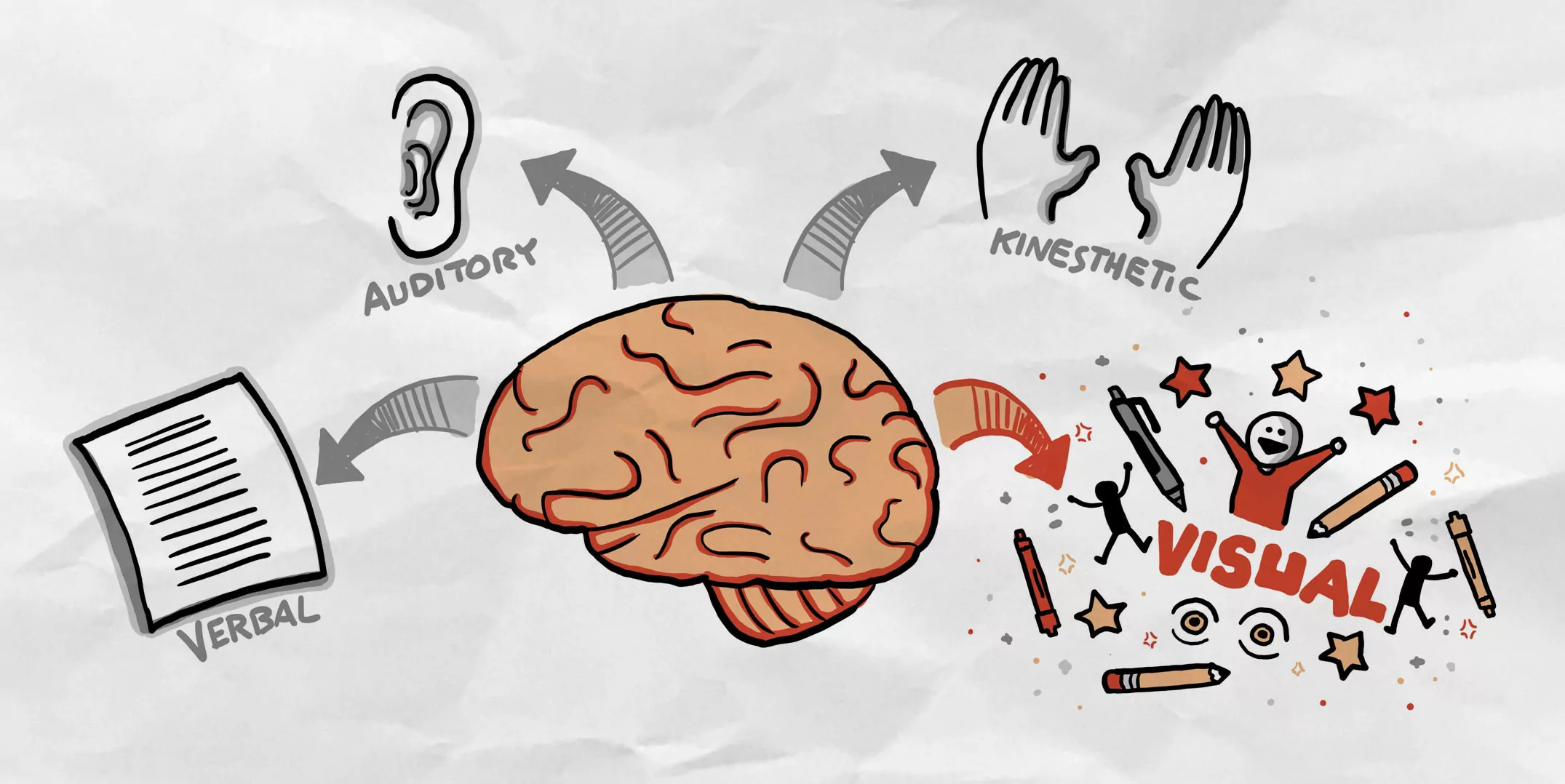
How Seeing Improves Memory (And Why Your Brain Loves Pictures)
Ever wonder why you remember a picture or video so easily, but forget written notes? You’re not the only one. Our brains remember what they see better than what they read. That’s why showing things is a helpful tool in schools, online classes, and even job training. We’ll check out how seeing helps you remember, why it’s so and how you can use simple seeing tricks to remember things quicker and for longer.
What Does Seeing To Learn Mean?
Seeing to learn means using your eyes instead of just reading or hearing. It’s using pictures, charts, colors, videos, and layouts to understand stuff. Here are some ways people see to learn: Watching a video instead of reading a long piece Studying with charts or maps Using pictures to sum up a topic Learning from books or slides with drawings Seeing doesn’t replace reading—it helps make it better. Why Pictures Work Better for Your Thinking Box Our brains grew up way before books and writing. People lived by watching what was around them, spotting patterns and remembering what they saw. That old way of thinking still affects how we learn today.
Here’s what scientists say:
Brains understand pictures faster than words Much of our brain is set aside for seeing People remember what they see longer than what they read In short, pictures stick with you. When you read, your brain has to figure out the words first. But when you see a picture, you get it right away. That quick understanding helps with memory.
How Seeing Improves Memory
1. It Makes Stronger Brain Paths
When you see to learn, your brain keeps shapes, colors, spots, and links. These paths make the memory stronger and easier to find later. If you study a labeled picture instead of a plain text, your brain remembers:
- The picture itself
- Where things are in the picture
- How things in the picture go together
- That’s better than just reading words.
2. Pictures Pop Up Easier Than Words
Think about street signs. You know them even if you don’t read them. It’s because visuals make you just know, while words take thinking. This is why:
- Cards with pictures work better
- Pictures are shared more than text
- Looking at pictures before tests is easier
- Your brain saves pictures like snapshots.
3. Seeing Lowers Thinking Pressure
Big blocks of words can be tiring. Pictures split things into smaller parts, helping your brain handle things easier. Instead of reading a lot about something, a simple chart can show it in seconds—without tiring you out. Less hard work means better remembering.
Seeing Everyday Education
Why Students Learn Visuals Better
Students have trouble because teachers don’t teach the way their brains learn. When lessons have:
- Charts Videos
- Color notes
Students get things faster and remember more.
This helps with things like:
Science Math
Computer stuff
Where places are History A picture can be better than pages of words.
Seeing In Classes Online
Classes online are a thing now, and visuals help. Good online classes use:
- Videos
- Screen stuff
- Moving drawings
Things you can play with Without visuals, learning online is boring. With visuals, it’s fun and sticks with you.
Seeing At Work Seeing to learn isn’t just for students—it’s for work too. Companies use seeing to: Teach workers Show steps Give data Make decisions Think about talks at work. A slide of words is forgotten fast, but a chart stays with you after the talk.
Easy Seeing Tricks
You Can Do Today You don’t need tools or art skills. Small moves make a big change.
1. Idea Maps
Idea maps turn topics into networks of thoughts. They show you:
- The big idea
- How things relate
- How to remember things
- Good for studying and thinking.
2. See Notes Instead of full sentences, try:
- Key words Drawings
- Arrows Boxes
- Colors
Your notes will be easy to see and hard to forget.
3. Picture Sums Turning a chapter into a picture helps your brain squeeze details in a way that sticks. Even making the picture helps you learn better.
4. Charts
Steps are best shown with seeing. Charts help you know order, not just facts. This helps with:
- Making programs
- Work steps
- Solving things
5. Learn With clips
Clips mix seeing, hearing, and moving. This gets many parts of the brain going, making learning better. Short clips work best for memory.
Seeing Vs Just Words
Word learning still helps, but it isn’t everything. Seeing means:
- Remembering more
- Focusing better
- Making hard topics easy
- Recalling faster
- The best way is both, with seeing in charge.
Mistakes To Not Make With
Seeing works best when done right. Don’t:
- Crowd visuals
- Use too many colors
- Use random pictures
- Make confusing designs
- You want clear, not fancy.
Seeing future
Visual help will become more immersive. Imagine learning science by visiting a cell in 3D, or knowing history by seeing an old town. These give memories that last. Last
Thoughts
Showing isn’t just new—it’s what the brain likes. By turning words into pictures, and stories, we make learning easy, fast, and memorable. Whether you’re a student, teacher, or just learning, seeing can improve memory. If you remember one thing, make it this: If you want to remember more, start seeing more.
1 thought on “How Visual Learning Improves Memory – A Brain-Friendly Way to Learn”